
Primary Antibody Matched Pairs


Biotium UGT1A9 (UDP glucuronosyltransferase 1 family, polypeptide A9)(UGT1A9/1229), CF647 conjugate, 0.1mg/mL
This antibody recognizes a protein of about 60 kDa, which is identified as human UGT1A9. It does not cross-react with the other UGT1A isoforms including UGT1A7, UGT1A8, and UGT1A10 and shows a high degree of specificity. UGT1A9 is a UDP-glucuronosyltransferase, an enzyme of the glucuronidation pathway that transforms small lipophilic molecules, such as steroids, bilirubin, hormones, and drugs, into water-soluble, excretable metabolites. This MAb binds to human hepatocytes and the majority of human hepatocellular carcinomas (HCC s). In frozen sections, it stains hepatic cells and may be used as a marker of the liver. This MAb also binds to cell preparations of hepatocellular carcinoma biopsies or cell lines.Primary antibodies are available purified, or with a selection of fluorescent CF Dyes and other labels. CF Dyes offer exceptional brightness and photostability. Note: Conjugates of blue fluorescent dyes like CF405S and CF405M are not recommended for detecting low abund

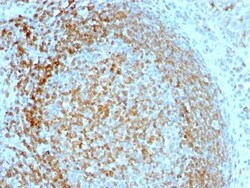
Biotium CD70(TNFS7/1026), CF488A conjugate, 0.1mg/mL
This antibody recognizes a protein of 30 kDa, identified as CD70. It is a cytokine that belongs to the tumor necrosis factor (TNF) ligand family. This cytokine is a ligand for TNFRSF27/CD27. It is a surface antigen on activated, but not on resting, T- and B-lymphocytes. It induces proliferation of co-stimulated T cells, enhances the generation of cytolytic T cells, and contributes to T cell activation. This cytokine is also reported to play a role in regulating B-cell activation, cytotoxic function of natural killer cells, and immunoglobulin synthesis.Primary antibodies are available purified, or with a selection of fluorescent CF Dyes and other labels. CF Dyes offer exceptional brightness and photostability. Note: Conjugates of blue fluorescent dyes like CF405S and CF405M are not recommended for detecting low abundance targets, because blue dyes have lower fluorescence and can give higher non-specific background than other dye colors.
Biotium CD55 (DAF)(F4-29D9), CF740 conjugate, 0.1mg/mL
Recognizes a single chain glycoprotein of 70 kDa, identified as CD55 (also known as decay accelerating factor, DAF). This MAb was clustered in Kobe at the Sixth International Workshop on Human Leukocyte Differentiation Antigens as F429D-9 (N-L120). CD55/DAF is widely expressed on cells throughout the body including leukocytes, erythrocytes, epithelium, endothelium, and fibroblasts. It is a Glycosyl phosphatidylinositol anchored (GPI-anchored) member of the membrane bound complement regulatory proteins that inhibit autologous complement cascade activation. It prevents the amplification steps of the complement cascade by interfering with the assembly of the C3-convertases, C4b2a and C3bBb, and the C5-convertase, C4b2a3b and C3bBb3b. CD55 also serves as receptor for CD97 and for echovirus and Coxsackie B virus. Anti-CD55 can be used as marker for paroxysmal nocturnal hemoglobinuria (PNH).Primary antibodies are available purified, or with a selection of fluorescent CF Dyes and o
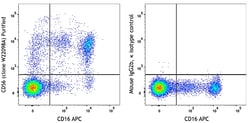
Biolegend Purified anti-human CD56 NCAM
Purified anti-human CD56 (NCAM) [W22098A]; Isotype: Mouse IgG2b, κ; Reactivity: Human; Apps: FC; Size: 100 μg
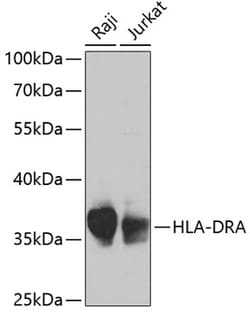
ABclonal Technology HLA-DRA Rabbit pAb

HLA-DRA is one of the HLA class II alpha chain paralogues. This class II molecule is a heterodimer consisting of an alpha and a beta chain, both anchored in the membrane. This molecule is expressed on the surface of various antigen presenting cells such as B lymphocytes, dendritic cells, and monocytes/macrophages, and plays a central role in the immune system and response by presenting peptides derived from extracellular proteins, in particular, pathogen-derived peptides to T cells. The alpha chain is approximately 33-35 kDa and its gene contains 5 exons. Exon 1 encodes the leader peptide, exons 2 and 3 encode the two extracellular domains, and exon 4 encodes the transmembrane domain and the cytoplasmic tail. DRA does not have polymorphisms in the peptide binding part and acts as the sole alpha chain for DRB1, DRB3, DRB4 and DRB5.
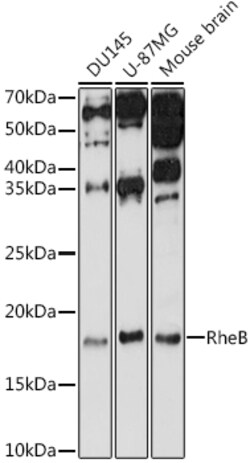
ABclonal Technology RheB Rabbit pAb
This gene is a member of the small GTPase superfamily and encodes a lipid-anchored, cell membrane protein with five repeats of the RAS-related GTP-binding region. This protein is vital in regulation of growth and cell cycle progression due to its role in the insulin/TOR/S6K signaling pathway. The protein has GTPase activity and shuttles between a GDP-bound form and a GTP-bound form, and farnesylation of the protein is required for this activity. Three pseudogenes have been mapped, two on chromosome 10 and one on chromosome 22.

Human SELE ELISA Pair Set 5PP (Sino Biological)
Each vial contains 135 ng of recombinant Human E-Selectin / CD62e / SELE. Reconstitute with 1 mL dilution buffer. After reconstitution, store at -20℃ to -80℃ in a manual defrost freezer. A seven-point standard curve using 2-fold serial dilutions in dilution buffer, and a high standard of 6000 pg/mL is recommended.
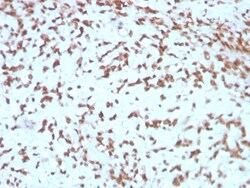
Biotium Cathepsin D (Tumor Marker)(CTSD/3275), Biotin conjugate, 0.1mg/mL
Cathepsin D is a ubiquitously expressed lysosomal aspartyl protease involved in the normal degradation of proteins. It is synthesized as an inactive 43 kDa preprocathepsin D that is cleaved and glycosylated to form a 46 kDa procathepsin D and then further cleaved to produce 28 kDa and 15 kDa subunits (heavy and light chains, respectively). Cathepsin D exhibits pepsin-like activity and plays a role in protein turnover and in the proteolytic activation of hormones and growth factors. Mutations in this gene play a causal role in neuronal ceroid lipofuscinosis-10 and may be involved in the pathogenesis of several other diseases, including breast cancer and possibly Alzheimer's disease. Primary antibodies are available purified, or with a selection of fluorescent CF Dyes and other labels. CF Dyes offer exceptional brightness and photostability. Note: Conjugates of blue fluorescent dyes like CF405S and CF405M are not recommended for detecting low abundance targets, because blu
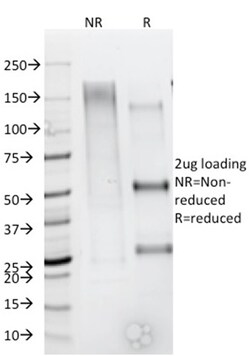
Biotium CD79b (B-Cell Marker) (IGB/1844), CF405S conjugate, 0.1mg/mL
CD79 (also designated Ig α/Igβ) is a heterodimer composed of α chains, designated CD79A or MB-1, andβ chains, designated CD79B or B29. The B cell antigen receptor complex (BCR) is formed by the association of CD79 with a membrane immunoglobulin, such as IgM or IgD. The membrane immunoglobulins IgM and IgD achieve surface expression and antigen presentation function in response to CD79 association. The cytoplasmic tails of both CD79A and CD79B contain an ITAM (immuno-receptor tyrosine-based activation) motif, which acts to initiate the BCR signaling reactions by binding to and activating tyrosine kinases.Primary antibodies are available purified, or with a selection of fluorescent CF Dyes and other labels. CF Dyes offer exceptional brightness and photostability. Note: Conjugates of blue fluorescent dyes like CF405S and CF405M are not recommended for detecting low abundance targets, because blue dyes have lower fluorescence and can give higher non-spe
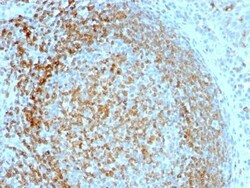
Biotium CD70(TNFS7/1026), CF568 conjugate, 0.1mg/mL
This antibody recognizes a protein of 30 kDa, identified as CD70. It is a cytokine that belongs to the tumor necrosis factor (TNF) ligand family. This cytokine is a ligand for TNFRSF27/CD27. It is a surface antigen on activated, but not on resting, T- and B-lymphocytes. It induces proliferation of co-stimulated T cells, enhances the generation of cytolytic T cells, and contributes to T cell activation. This cytokine is also reported to play a role in regulating B-cell activation, cytotoxic function of natural killer cells, and immunoglobulin synthesis.Primary antibodies are available purified, or with a selection of fluorescent CF Dyes and other labels. CF Dyes offer exceptional brightness and photostability. Note: Conjugates of blue fluorescent dyes like CF405S and CF405M are not recommended for detecting low abundance targets, because blue dyes have lower fluorescence and can give higher non-specific background than other dye colors.
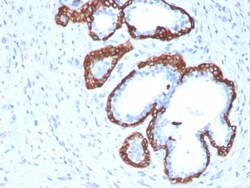
Biotium Cytokeratin 5 (KRT5) (Basal, Myoepithelial & Mesothelial Cell Marker)(KRT5/3594), Biotin conjugate, 0.1mg/mL
This MAb recognizes a protein of 58 kDa, which is identified as Cytokeratin 5 (KRT5). This type II cytokeratin is specifically expressed in the basal layer of the epidermis with family member KRT14. Antibodies to KRT5 identify basal cells of squamous and glandular epithelia, myoepithelia, and mesothelium. Anti-cytokeratin 5 has been reported useful in the differential diagnosis of metastatic carcinoma in the pleura versus epithelioid mesothelioma. Almost all squamous cell carcinomas, half of transitional carcinomas, and many undifferentiated large cell carcinomas express. Anti-KRT5, along with anti-p63, affords a high sensitivity and specificity for squamous differentiation. Myoepithelial cells of the breast, glandular epithelia, and basal cells of the prostate are labeled with anti-KRT5. Primary antibodies are available purified, or with a selection of fluorescent CF Dyes and other labels. CF Dyes offer exceptional brightness and photostability. Note: Conjugates of blue f
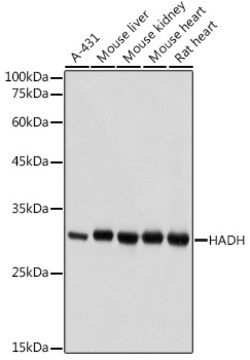
ABclonal Technology HADH Rabbit pAb
This gene is a member of the 3-hydroxyacyl-CoA dehydrogenase gene family. The encoded protein functions in the mitochondrial matrix to catalyze the oxidation of straight-chain 3-hydroxyacyl-CoAs as part of the beta-oxidation pathway. Its enzymatic activity is highest with medium-chain-length fatty acids. Mutations in this gene cause one form of familial hyperinsulinemic hypoglycemia. The human genome contains a related pseudogene of this gene on chromosome 15.
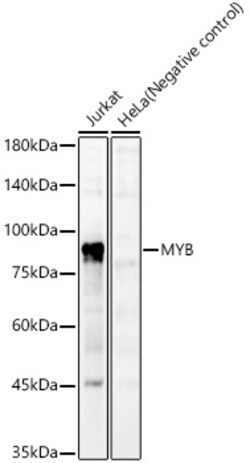
ABclonal Technology MYB Rabbit pAb
This gene encodes a protein with three HTH DNA-binding domains that functions as a transcription regulator. This protein plays an essential role in the regulation of hematopoiesis. This gene may be aberrently expressed or rearranged or undergo translocation in leukemias and lymphomas, and is considered to be an oncogene. Alternative splicing results in multiple transcript variants.
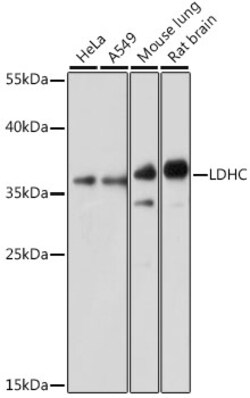
ABclonal Technology LDHC Rabbit pAb
Lactate dehydrogenase C catalyzes the conversion of L-lactate and NAD to pyruvate and NADH in the final step of anaerobic glycolysis. LDHC is testis-specific and belongs to the lactate dehydrogenase family. Two transcript variants have been detected which differ in the 5 untranslated region.
Miltenyi Biotec, Inc. CD55 (DAF)-VioBright 515, human, 30 t
Identification and enumeration of CD55 (DAF)+ cells by flow cytometry.
This product is subject to the following: Miltenyi Biotec, Inc. Terms and Conditions of Sale For Products and Services